


Lab Notes
The thundering launch of GOES-R
As the Atlas V rocket’s inferno lit up the night sky early in the evening of Nov. 19, 2016, it was as if the...
Bouncing off the satellites
On Oct. 30, NASA finally retired the Kepler space telescope, the prolific planet-hunter that has been scanning the skies for the past nine years....

2011 Preview of Science Headlines
The Fiske Planetarium and Science Center at CU-Boulder is proud to bring you a new monthly column on current topics in the earth and space sciences. Here are some developing science and technology headlines that are sure to spark imagination and curiosity. In the ...
Making the planet great again
In his 2001 book Who Owns the Sky, entrepreneur Peter Barnes suggests that any system designed to tax heat-trapping pollution must redistribute the revenue...
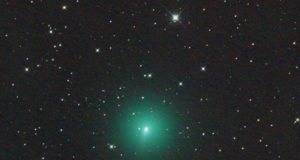
Comet ATLAS shrugs
In late December 2019, a telescope in Hawaii operated by the Asteroid Terrestrial-impact Last Alert System (ATLAS) discovered a comet on its way to...
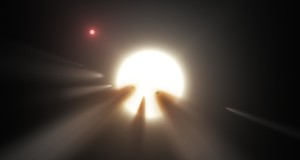
Chasing alien megastructures
In 1960, physicist Freeman Dyson suggested that the energy demands of all technological civilizations would eventually exceed the natural resources of their home planet....
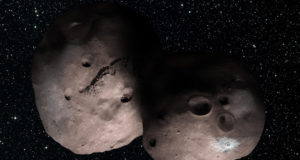
Discovering Ultima Thule
Four billion miles from the Earth on New Year’s Eve, a spacecraft traveling at 32,000 miles per hour zoomed past a tiny object roughly...
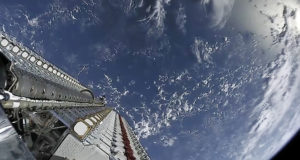
Crowding the night sky
I
n mid-March, SpaceX launched 60 satellites into orbit 340 miles above the surface of the Earth, part of a planned global broadband internet service...
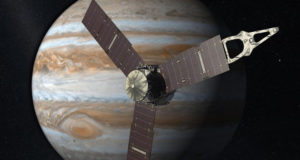
Juno reaches Jupiter
In Roman mythology, Jupiter is king of the gods and his wife Juno is the queen. Jupiter was known for his infidelity, so Juno...
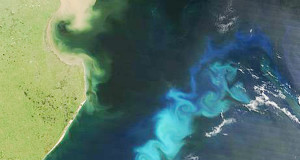
Engineering the climate
Last month at a conference in Paris, 195 countries adopted a landmark agreement on how to respond to the Earth’s changing climate. The agreement...

Blasting the planet next door
In September 1859, the most powerful explosion in recorded history burst from the surface of the sun, releasing more energy than a billion of...
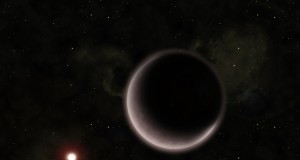
Are we alone in the universe?
This is one of humanity’s most fundamental and persistent questions. The answer has always seemed, until recently, elusive and out of reach. But this is beginning to change. Biologists have been deepening our understanding of what kinds of environments life might ...