
It’s no great secret: Colorado is not the first place that springs to most people’s minds when considering racial diversity. That’s especially true in Boulder County, where U.S. Census data suggests white people make up nearly 90% of the population. But when it comes to the grand arc of Black life here in our little pocket of the Front Range, those numbers don’t tell the whole story.
“There are, there were, and there will be Black people in Colorado,” Minister Glenda Strong Robinson told a packed house to an eruption of cheers at the city’s historic Second Baptist Church during a Sept. 11 NAACP Boulder County meeting. The night’s agenda centered on discussion of an upcoming joint exhibition with the Museum of Boulder exploring local African American history from pre-statehood to the present.
But there’s more to Proclaiming Colorado’s Black History, the kaleidoscopic and community-driven show on display at the downtown history center through September 2025, than simply underscoring the existence of African American people in the Centennial State. It’s also about broadening the frame on the types of stories that get told about the cultural legacies forged in the fire of the African diaspora.
“When people think of us, they think of disasters, they think of slavery … they don’t think of the joy that we inhabit,” says Adderly Grant-Lord, a Lafayette-based visual artist who curated the exhibition’s section on the cosmic Black cultural tradition known as Afrofuturism. “No matter how bad it gets, we know how to celebrate life and we know how to keep moving forward. We know how to go to the trenches and come out looking pretty.”
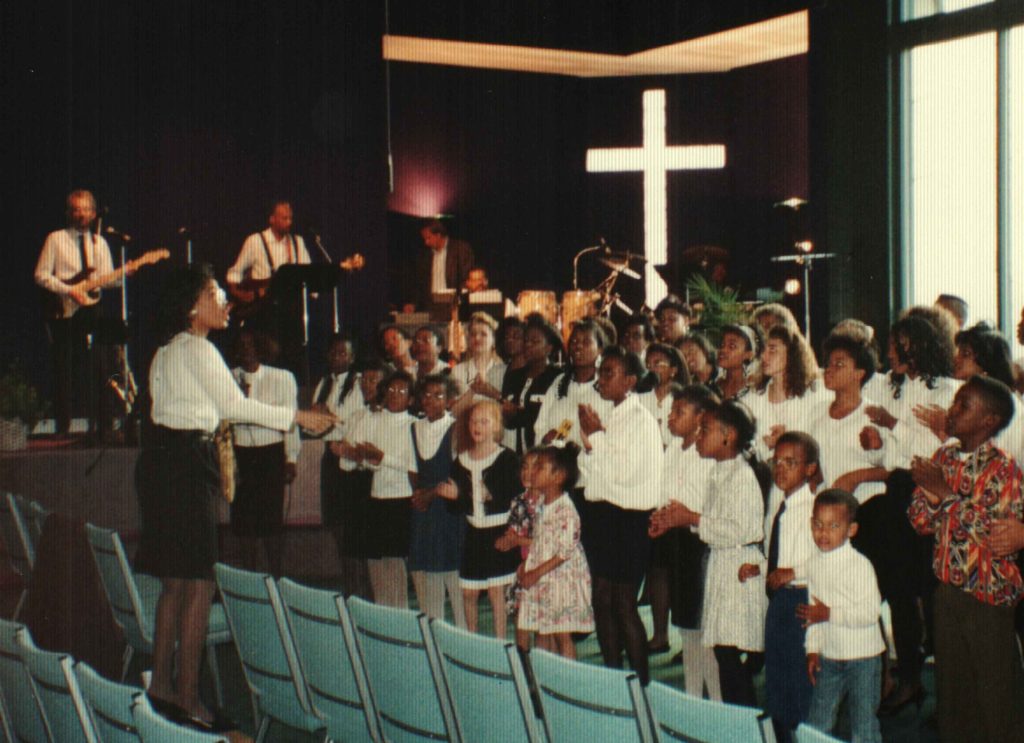
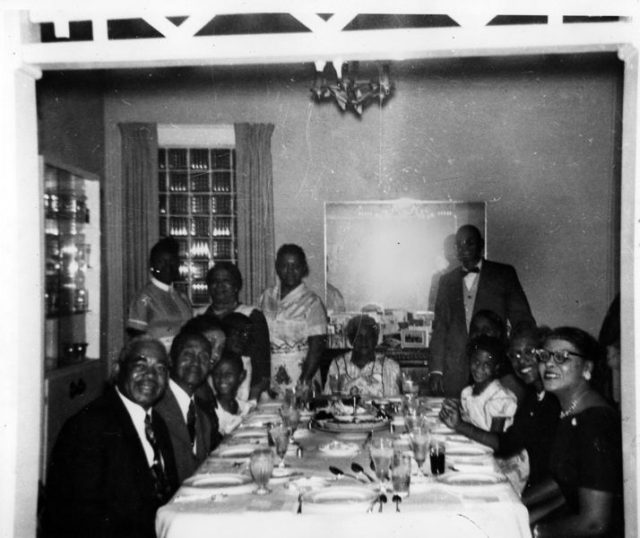
Second Baptist Church children’s choir. Courtesy: Eileen Lingham Walker
‘I see a blessing’
With this more holistic image of Blackness in mind, visitors to the new Museum of Boulder exhibition can expect to encounter the full fidelity of African American experiences in Colorado: from pain to perseverance, excellence to exclusion, and points in between.
According to exhibition co-project director and lead curator Adrian Miller, a Denver-based cuisine writer dubbed the “Soul Food Scholar,” the show’s encyclopedic quality — featuring everything from a recreation of Colorado’s largest Black homesteading settlement to the trash picker used by Zayd Atkinson in his viral encounter with a Boulder police officer — was a daunting but sacred task.
“One of the challenges for the exhibit is it’s a vast story to tell — there’s a lot of rich African American history,” Miller said during a guided preview and feedback session on Sept. 22. “So we did a community survey to find out what people wanted. And that’s how we narrowed it down to [the themes of] building community, social justice, civil rights, arts and entertainment, business and enterprise, and Afrofuturism.”
On that first score, the exhibition launches with an immersive recreation of Boulder’s Second Baptist Church, a cornerstone of the city’s Black faith community since its humble beginnings in 1908. Furnished with loaned items from longtime members, the installation includes audio and video from the church’s famous choir and a pew from the sanctuary where visitors can sit and reflect.
“We feel it’s necessary for us to tell our story in the context of the Colorado story, as it relates to Black history,” says Second Baptist Church Pastor James Ray. “This is an opportunity to let the community know how good God has been to this particular church, which has been around for over 115 years. So as I see this exhibit, I see a blessing.”

A representation of Anna Belle Riley, described by Museum of Boulder panel materials as the earliest known child of African heritage born in Colorado Territory. Courtesy: Museum of Boulder
Black futures
But it’s not all blessings in Proclaiming Colorado’s Black History. Dovetailing with its spotlight on Black accomplishment and local changemakers — like campaign ephemera from Boulder’s first African American mayor Penfield Tate II, alongside a bevy of homegrown stars, leaders and titans of industry — the show doesn’t shy from the more gruesome aspects of the state’s past.
That much is clear upon entry to the exhibition’s social justice wing, which greets visitors with the recreation of a plaque commemorating 15-year-old Preston Porter Jr. who was lynched by a white mob in 1900 outside Limon. The grim spectacle of the child’s brutal killing was attended by more than 300 people, offering a stark reminder of the anti-Black violence baked into public life in the Centennial State and beyond.
“For whatever reason, when people think about racism, they think, ‘Oh, that’s a southern U.S. thing.’ But it’s everywhere,” Miller says. “To invoke the old Malcolm X quote: ‘The South is anywhere from Canada going down.’ We want to talk about the legacy of how African Americans, despite being terrorized … were able to carve out community and assert their humanity.”
Through the heavy veil of all this darkness, Proclaiming Colorado’s Black History dwells in the light. From the hope of the first Black child born in Boulder to the soulful sounds of the Second Baptist Church, the idea is to leave visitors to the museum’s first-floor gallery space thrumming with the power of the past and the possibility of what’s to come.
“The amount of soul and energy … that is in us — we live in Boulder, and it’s not shown,” says Grant-Strong, whose curation closes the exhibition with a colorful pop of visual artwork inviting visitors to imagine a Black future. “This is a way of telling people who we are.”
ON VIEW: Proclaiming Colorado’s Black History. Sept. 30 through September 2025, Museum of Boulder, 2205 Broadway. Tickets here.